







An escape to Mani gives the opportunity to swim in crystal waters, explore old villages and dine like a local.
Tucked away in the southern reaches of Laconia in Peloponnese, Mani offers a gateway to a Greece less travelled—raw, rugged, and breathtakingly authentic. An escape to this storied region isn’t just a holiday; it’s an immersion into a world where time slows down. Here, sun-soaked days begin with swims in crystal-clear waters, unfold with strolls through old stone villages, and end under starlit skies with meals that celebrate local flavours and traditions. Whether you’re chasing serenity, culture, or culinary discovery, Mani delivers all three with unmistakable charm.
The starting and ending point of our tour of Laconian Mani is the historic town of Areopoli. Our first stop is the port of Areopoli, the unsurpassed and famous Limeni.
Limeni (Λιμένι)


This small coastal settlement and historic harbour boast emerald waters and dramatic stone architecture. It also has a rich heritage tied to the legendary Mavromichalis family, revered as leaders of Mani and key figures in Greece’s 1821 War of Independence. The family traces its origins to an orphan, Michalis, who fled Ottoman-conquered Thrace and was dubbed “Mavromichalis” for his dark fate. His descendants, admired for their striking appearance and called “fairy-born” by locals, built their imposing four-storey tower in 1762. A tower that still stands today as a restored monument.

Limeni enchants modern visitors with its deep turquoise waters accessed by rock-cut stairs and platforms, charming seaside taverns, and the possibility of spotting sea turtles in their natural habitat. Though its growing popularity may threaten its tranquil charm, the image of stone houses rising from crystal-clear waters ensures that Limeni will remain etched in the heart of anyone lucky enough to experience it.
After departing from Limeni and heading south for 16 km, we arrive at the natural wonder known as the Diros Caves.
Diros Caves

The Diros Caves are located near the village of Pyrgos Dirou. These caves, particularly the famous Vlychada Cave, form a vast and intricate underground network of chambers and waterways. They are adorned with spectacular stalactites and stalagmites that have formed over thousands of years. Visitors explore the caves by boat, gliding silently over the still, crystal-clear waters that reflect the surreal beauty of the formations above. Archaeological findings suggest that the caves were inhabited in prehistoric times and were possibly used as places of worship. The mystical atmosphere, combined with the natural artistry of the rock formations, makes the Diros Caves a truly unforgettable experience—like entering another world hidden beneath the rugged landscape of Mani.
You can visit the official website diros-caves.gr for information regarding the opening hours and ticket prices for the caves.
After exploring the Caves, the next destination is the bay of Mezapos, located 16 km further south.
Mezapos (Μέζαπος)
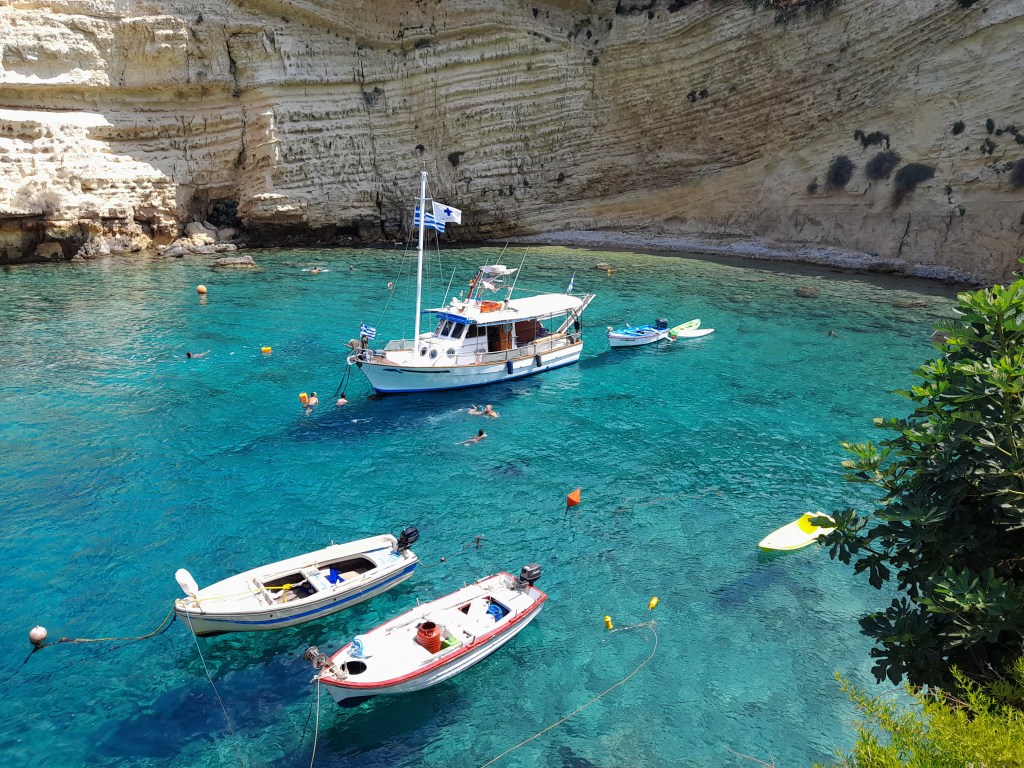
The small fishing settlement of Mezapos is nestled in a bay on the Tigani peninsula. Perched on a rocky outcrop between two streams, Mezapos rose to historical prominence in the 18th century due to Nikolos Sassaris, a pirate of Sardinian origin who became known as the “one-eyed pirate” after losing an eye in a clash with a Turkish corsair. He built a 16-metre tower with secret sea tunnels and hidden basements. Sassaris met his end in a naval skirmish while returning to Mani with a captured French vessel, his body swallowed by the sea. Legend says his treasure remains hidden in one of Mezapos’s sea caves. Today, it remains a quiet, traditional village clinging to the sea-swept rocks, flanked by the emerald waters of Chalikiada Beach on one side and the scenic cove of Kourkou on the other—two stunning, easily accessible reminders of Mani’s wild and mystical allure.
Leaving the emerald waters of the Mezapos, we cross the barren and majestic region of Mani. On the way we pass through numerous distinctive villages with soaring towers, such as Koita (Κοίτα), before arriving at Gerolimenas.
Gerolimenas (Γερολιμένας)

Another picturesque coastal village in Mani, Gerolimenas, has grown into an important tourist destination. Its tiny harbour, with its stone-built buildings soaked in the sea, served as a pirate base. However, with the creation of the Greek state, it became a significant fishing port. There were numerous ice-making facilities and stores where the catches were traded, as well as a dock where sponge fishing boats were anchored. The neoclassical and huge stone structures of Gerolimenas reflect the settlement’s development during that time. Today, in addition to a pebbly beach, there are various restaurants, cafes, and lodging options.
After the stop in Gerolimenas, we follow the winding road towards Vathia, where a dip in the almost hidden sandy beach of Gyalia (Γυάλια) is nearly obligatory before we continue our journey.
Vathia (Βάθεια)

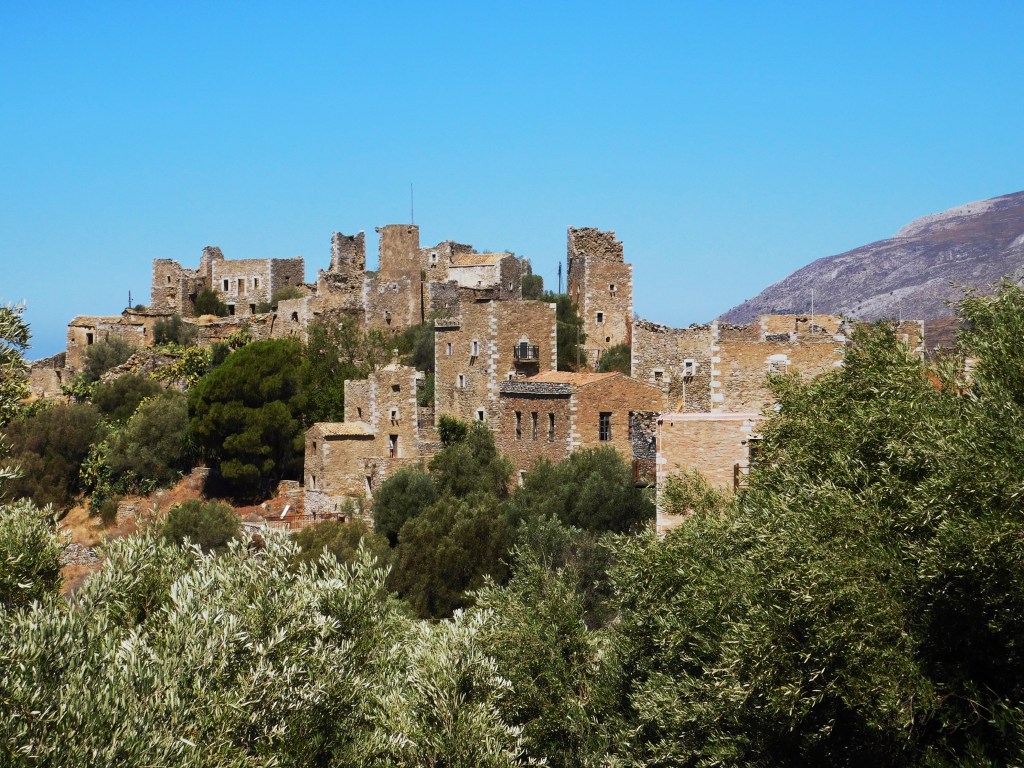
Perched on a rugged hillside in the heart of the Mani Peninsula, Vathia is a hauntingly beautiful village that captures the raw spirit of southern Greece. Famous for its tower houses—stone-built structures once used for defence—the village feels suspended in time, offering sweeping views of the sea and a sense of solemn grandeur.


Its narrow, winding paths and crumbling architecture tell stories of feuds, resilience, and centuries-old tradition. Surrounded by olive groves and bathed in golden light, Vathia is a destination that embodies perfectly the authenticity, solitude, and fiercely independent past of Mani. [See also the photo at the top of the article.]
We arrive at Marmari beach 5 km after leaving Vathia and following a route over the sea.
Marmari (Μαρμάρι)

This beach stands out from the rest of South Mani’s beaches. It is a magnificent, expansive sandy beach that bears no resemblance to the surrounding pebbly and small beaches. The waters are incredibly clear and shallow, making it a perfect family beach. The Marmari Paradise Resort Hotel, located at one end of the beach, features a restaurant, sun loungers and an amazing bar with a beachside outlook.
Leaving Marmari and heading towards the eastern side of Mani, we came across Porto Kagio.
Porto Kagio (Πόρτο Κάγιο)

The small fishing community is situated at the end of a protected harbour, surrounded by barren hills and olive groves. The Ottomans built a stronghold in the area in the 16th century, which remained influential until the Greek Revolution. The few houses along the narrow beach contain a few motels and a few taverns. In general, Porto Kagio is a wonderful location for those seeking quiet and solitude.
We begin our return journey to Areopoli from Porto Kagio, and we are now heading north. Before arriving in Alypa, we pass through little villages and quiet beaches with breathtaking views, such as Ampelo (Άμπελο).
Alypa (Αλύπα)

Although it provided the setting for John Cassavetes’ film The Tempest in 1982, most people were unaware of the magnificent Alypa for many years. Today, travellers to Mani have begun to discover its unique beauty. Alypa stands out with some old tower buildings reaching the sea, creating a spectacular mix with the white pebbles of the beach and the crystal-clear waters of the sea.


The little chapel at the end of the harbour, nestled inside a garden, is also noteworthy for its magnificent frescoes. Today, Alypa has a guesthouse and tavern, and we recommend leaving your car in the parking area outside the village, especially in August, when the crowds are too large for the size of the beach.
Continuing north and around 15 km from Alypa, the provincial route leads us to the once-famous village of Flomochori.
Flomochori (Φλομοχώρι)

The historic village of Flomochori no longer holds the same importance it once did, but its lofty and well-preserved towers convey the story of its prosperous past. The town centre, with its charming square and stone-built residences from the 17th and 18th centuries, is well worth a visit. The view from here to the Laconian Gulf is truly amazing.
A few kilometres from Flomohori, after passing the sign for the impressive beach of Chalikia Vatta (Χαλικιά Βάττα), we arrive at the seaside village of Kotronas.
Kotronas (Κότρωνας)

The settlement features unique architecture and a little sandy beach in the heart of the village. Also interesting is the newly erected cultural centre and the characteristic bronze statue of Macedonian hero Nikephoros Demestichas. Near the shore, there are taverns and the Crown Cafe, which is perfect for coffee and snacks.A 300-metre-long thin stretch of land connects Kotronas to Skopa islet. On the islet, you may discover ancient ruins and the Agios Nikolaos church.
After Kotronas and prior to our return to Areopoli, we make one last stop at the stunning beaches of Skoutari.
Skoutari (Σκουτάρι)

Skoutari is a village formed by refugees from Constantinople following its fall in 1453. The refugees named the village after their neighbourhood in Constantinople. Below the village of Skoutari is a big beach separated into three sections. The beaches, beginning on the left side of the bay, are called Kalamakia, Vordona, and ultimately Agia Varvara. The first two beaches are sandy, and the third has stones. The last beach owes its name to the Byzantine church, built in the 12th century, on the seashore. The few white houses next to the church (two of which are taverns) create the ideal summer atmosphere and evoke images of Greek islands.
Areopoli (Αρεόπολη)
Named after Ares, the ancient Greek god of war, Areopoli played a pivotal role in the Greek War of Independence, with the revolution against Ottoman rule officially declared here on March 17, 1821. Its stone-built tower houses and narrow cobblestone streets reflect the traditional architecture of Mani. Today, Areopoli is a charming destination for travellers seeking a blend of historical intrigue and authentic Greek ambiance.


Visitors can explore its quaint shops, traditional bakeries and local taverns, where they can savour local dishes while soaking in the rich cultural heritage. As you wander through Areopoli, especially during the evening, the echoes of its storied past come alive. The town invites you to delve deeper into the history that shaped this remarkable area.
Mani’s rich gastronomic tradition

Mani has a rich gastronomic tradition that is strongly ingrained in its history, climate, and terrain. Its cuisine has simple, substantial dishes made with local ingredients, such as olive oil, wild herbs, and seasonal vegetables. Mani is most known for its superb extra virgin olive oil, cured meats like syglino (pork preserved in olive oil and herbs), and artisanal cheeses. Slow-cooked stews, savoury pies (pites), and dishes seasoned with mountain herbs and garlic are common ingredients in traditional recipes. Bread baking in wood-fired ovens, and handmade pasta dishes (like tsouchti) are also important.
Where to eat during your trip


You can taste the local cuisine that exemplifies the region’s self-sufficient and resilient attitude at various restaurants along the way. We have singled out the following:
- Taratsa- Ταράτσα (Limeni): On a beautiful terrace with a unique view, you can try traditional cuisine as well as modern flavours.
- Veloudo – Βελούδο (Gerolimenas): In the port of Gerolimenas, this impressive modern restaurant is ideal for seafood.
- Akrotiri – Ακρωτήρι (Porto Kagio); The tavern is a great choice in this remote corner of Mani for good local food.
- Demestichas – Δεμέστιχας (Skoutari): Right where the waves crash on the beach of Agia Varvara, this tavern is a timeless value for seafood in the area.
- Barba Petros – Μπάρμπα Πέτρος (Areopoli): If you want to combine good local food with a walk in the centre of Areopoli, this tavern is a very good choice.
- I Kali Kardia – Η Καλή Καρδιά (Chosiari – Gythio): Although this particular tavern is located a little off the track we have described (on the road between Gythio and Aeropoli), it is undoubtedly the best in the area. Here you will try all traditional dishes of Mani, perfectly cooked and generously portioned. [See photos above.]
In the centre of Areopoli, the bakery Mani’s Traditional Products (Παραδοσιακά Προιόντα Μάνης) is the perfect place to discover and sample the region’s offerings. Honey, oil, sweets, pies, and all the special products of the Mani region can be found in one location.
More than just a memorable escape

A tour of Mani is more than just a memorable escape—it’s a journey into the heart of Greece’s untamed soul. Even as tourism rapidly finds its way here, Mani has managed to preserve its authenticity, offering a rare blend of raw beauty and living tradition.

From its dramatic landscapes and timeless stone villages to its pristine beaches and rich gastronomic heritage, every corner of Mani tells a story. It’s a place that lingers in your memory, not just for what you see but for how it makes you feel—connected, inspired, and quietly transformed.


