







Travelling isn’t only about famous landmarks or postcard-perfect sights. Sometimes the most memorable stops are tucked away, off the main path, in small, unexpected corners that make you pause, laugh, and wonder.
They celebrate creativity, curiosity, and the strange beauty in everyday life. From objects that spark nostalgia to displays that make you scratch your head in disbelief, these hidden spots surprise at every turn. They remind us that history, culture, and human stories can be found in the most unusual places.
Visiting them is like stepping into another world, one that surprises, delights, and challenges your expectations. They’re the kind of stops you’ll remember long after your trip is over.
In this article, we’ll look at four of the strangest museums around the world that capture exactly that spirit.
1. Momofuku Ando Instant Ramen Museum – Osaka, Japan
Instant noodles may seem like a quick fix for students and night owls. In Osaka, they’re celebrated as one of Japan’s greatest inventions. The Momofuku Ando Instant Ramen Museum in Ikeda honours the man behind this creation. He invented the world’s first instant noodles after World War II.
Walking through the museum feels like stepping into a timeline of innovation. You start with a recreation of Ando’s original research shed. It’s where he experimented with flash-frying noodles until he struck gold with “Chicken Ramen” in 1958.
From there, you wander into the Instant Noodles History Cube and the Instant Noodles Tunnel. They feature nearly 800 package designs showing ramen’s rise from novelty to global phenomenon.

The museum isn’t just about looking; it’s interactive. Visitors can join the My CUPNOODLES Factory to customise their own cup with flavours, toppings, and artwork. Or head to the Chicken Ramen Factory, where you roll, steam, and fry noodles from scratch. Reservations are needed, but the payoff is worth it. You leave with something you created yourself.
Beyond the fun, the museum shows how instant ramen addressed hunger and convenience in a postwar world. Over time, it evolved into a global pop-culture symbol. It’s playful, filling, and surprisingly thought-provoking.
How did Momofuku Ando innovate postwar food culture?
Ando invented instant noodles to solve postwar hunger, providing a convenient, nutritious, and long-lasting meal. His creation transformed eating habits worldwide, combining affordability with portability. It also sparked a global instant-food industry that continues to evolve and inspire culinary innovation today
2. Daisy Airgun Museum – Rogers, Arkansas, USA
In Rogers, Arkansas, you’ll find a museum that feels straight out of a childhood memory: the Daisy Airgun Museum. It’s dedicated to the iconic BB gun brand that became a staple of American culture.
Inside, you’ll see everything from the early air rifles to limited editions, along with the kind of memorabilia that sparks instant nostalgia. The museum even secured a quirky world record in 2023. It built the biggest Daisy BB gun ever made, a huge version of the classic toy many grew up with.
Rogers itself is a lively place to visit, with local shops, restaurants, and a welcoming community that makes it more than just a stopover. That said, anyone planning a trip through Arkansas should be extra cautious on the road. Traffic fatalities have risen 30% since 2014, and the numbers kept climbing between 2021 and 2024.

It’s a sobering reality that contrasts with the light-hearted charm of the museum. If an accident does occur, having a Rogers personal injury lawyer to call can make managing the situation far less overwhelming.
They can also help secure fair compensation for medical bills or lost income, as noted by Keith Law Group. Most importantly, they handle the legal stress so you can focus on recovery
Can visitors interact with any of the BB guns?
Original BB guns are strictly for display to protect their historical value. Replicas in the gift shop allow hands-on exploration. Staff occasionally demonstrate the mechanisms safely, giving visitors an understanding of functionality without risking damage to rare or vintage pieces.
3. Museum of Broken Relationships – Zagreb, Croatia
At first glance, a museum filled with objects from failed relationships sounds like a parody. But the Museum of Broken Relationships in Zagreb is deeply moving and often unexpectedly funny.
It began in 2003 when artist Dražen Grubišić and film producer Olinka Vištica broke up. They chose to keep their leftover mementos as a kind of artistic project. By 2006, the idea had grown into a travelling exhibition. In 2010, it found a permanent home in a baroque palace in Croatia’s capital.
The museum now holds more than 3,500 donated objects, though about 90 are displayed at a time. Each item comes with a story from its donor. Examples include an axe used to chop up an ex’s furniture, a Godzilla toy, a pair of shoes, and a stuffed animal. Some are devastating, others hilarious, but all are intensely personal.
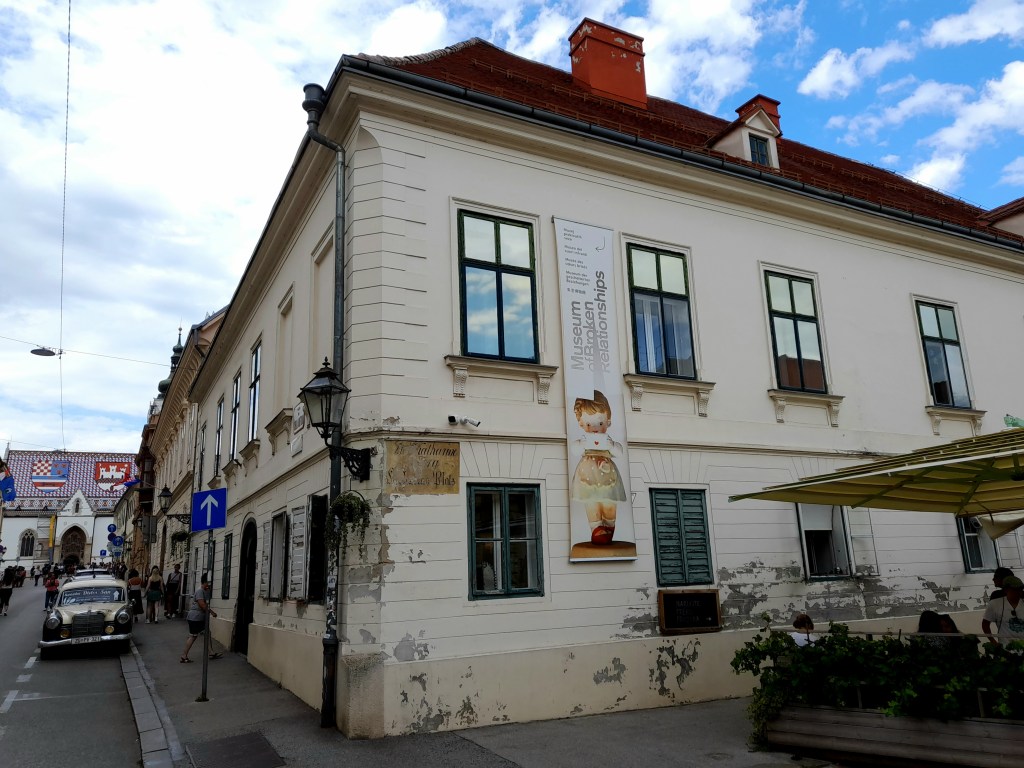
Visitors can also read entries in the Book of Confessions, a guest book filled with reflections in dozens of languages. The rotating displays make each visit unique, as new objects and stories replace older ones. What seems like a museum about heartbreak is really a museum about love. It shows how love changes, how it ends, and how it lingers in the things we keep.
How does the museum collect its exhibits?
All objects are donated by individuals worldwide. Each item includes a short story documenting the emotional significance of relationships. The collection preserves personal experiences of love and heartbreak, creating a shared narrative that connects visitors to human emotions across cultures and generations.
4. The Hair Museum – Avanos, Cappadocia, Turkey
Among the cave homes and surreal landscapes of Cappadocia, you’ll find one of the strangest collections anywhere: the Hair Museum of Avanos. Founded by local potter Chez Galip in 1979, it began with a single lock of hair from a friend. Over the years, other women added to the wall until the collection became a full-fledged museum.
Today, more than 16,000 locks of hair hang inside the subterranean space, each tagged with the donor’s name and address. The sight is startling, almost overwhelming, but also intimate. Every strand is a personal story preserved in an unconventional way.
What sets this museum apart is its ongoing tradition. Twice a year, in June and December, Galip hosts a drawing. The first customer of the day gets to pick ten locks at random. These lucky ten receive an all-expenses-paid weeklong stay in beautiful Cappadocia, complete with hands-on pottery workshops. It’s part lottery, part celebration of the community that keeps adding to the walls.

While Cappadocia itself is already dreamlike with its fairy-chimney rock formations and cave dwellings, the Hair Museum adds a layer of human eccentricity. It’s haunting, unusual, and oddly touching. It’s a reminder of how memory can be woven into even the smallest tokens.
How is the hair preserved and displayed?
Hair is carefully labelled with donor details and mounted on walls. The museum maintains a controlled environment to prevent deterioration, ensuring that each lock remains intact. The display creates a visual mosaic that transforms personal strands into a collective artwork.
In short, these museums prove that culture doesn’t always mean masterpieces or monuments. Sometimes it’s about ramen packages, breakup mementos, or toys that shaped a childhood. These collections may be unusual, but they capture something universal: the way people find meaning in everyday objects.
If you’re planning your next trip, consider stepping off the beaten path. These four museums won’t just entertain you. They’ll surprise you, challenge you, and leave you with stories that linger long after you’ve left.


